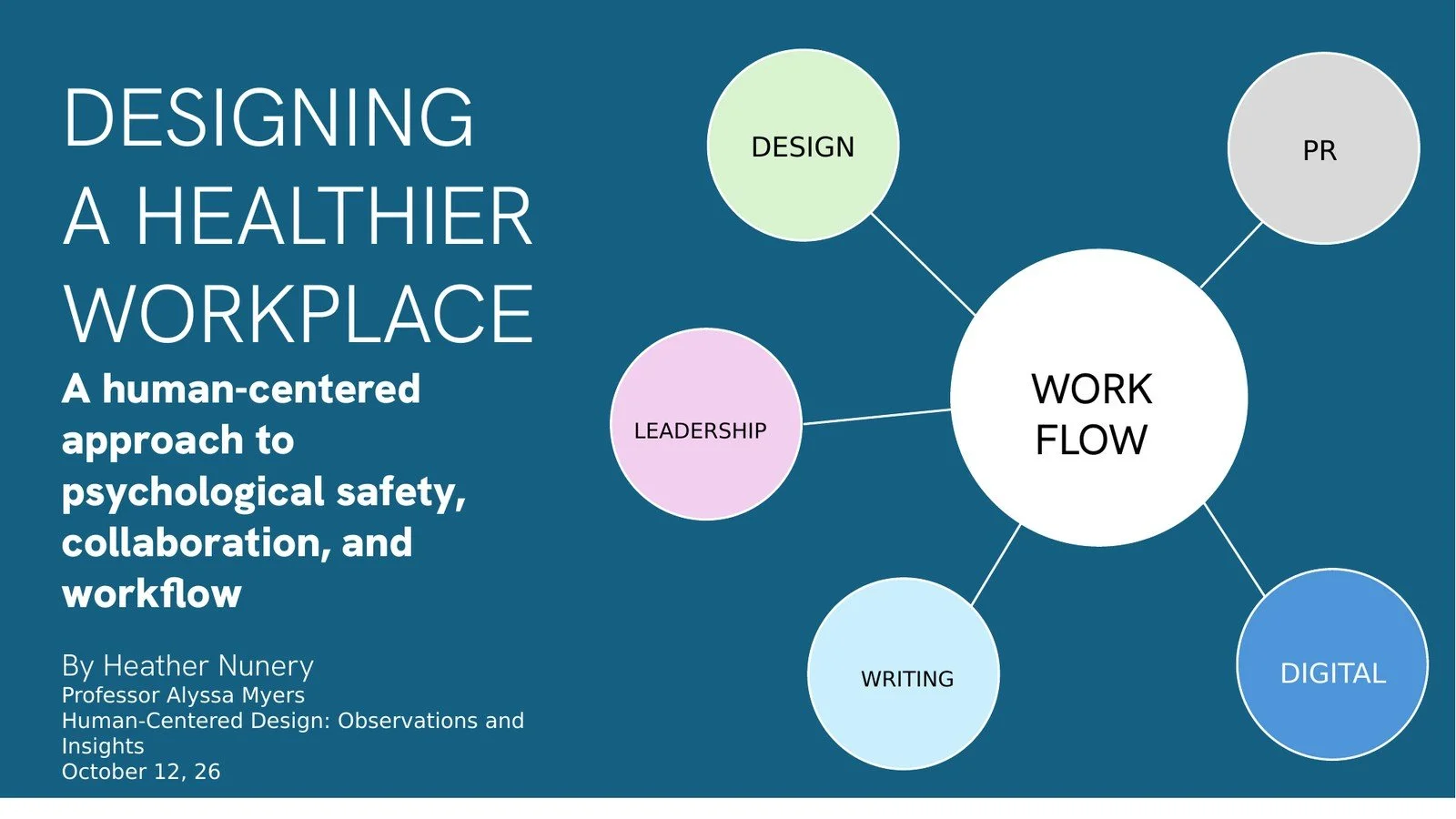
Designing a Healthier Workplace
A human-centered framework for psychological safety, collaboration and workflow
Psychological Safety + Workflow Framework
-
A graduate human-centered design project that treats workplace culture as a design problem. I researched how interpersonal friction affects psychological safety, knowledge sharing and workflow on a multidisciplinary marketing team, then designed a framework, pilot plan and success measures to make asking for help feel normal, not risky.
-
My Role
Researcher, Strategist & Designer
Context
Graduate coursework · Human-Centered Design: Observations and Insights, 2026
Project Scope
Problem Framing · Secondary Research · Persona · Service Framework · Pilot Plan · Success Metrics · Presentation Design
The Problem
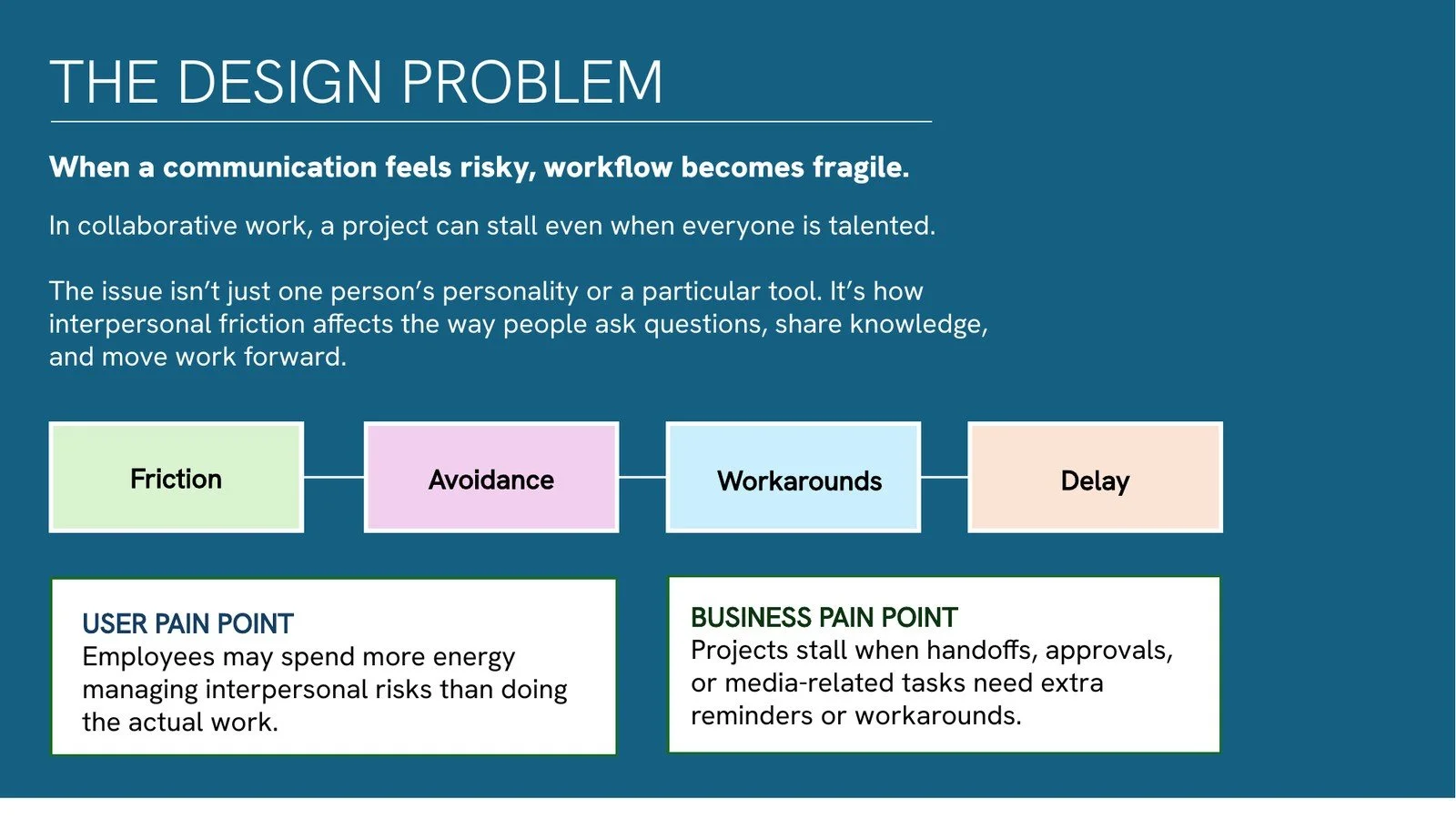
On a multidisciplinary marketing team, design, writing, digital, leadership and public relations all depend on one another to move work forward. When asking a colleague for help feels risky, people delay questions, route around each other and rely on workarounds. What looks like a personality clash becomes an operational problem: stalled handoffs, repeated reminders and slower projects.
My guiding question: how might human-centered design improve psychological safety, communication, collaboration and workflow on a team experiencing interpersonal friction?
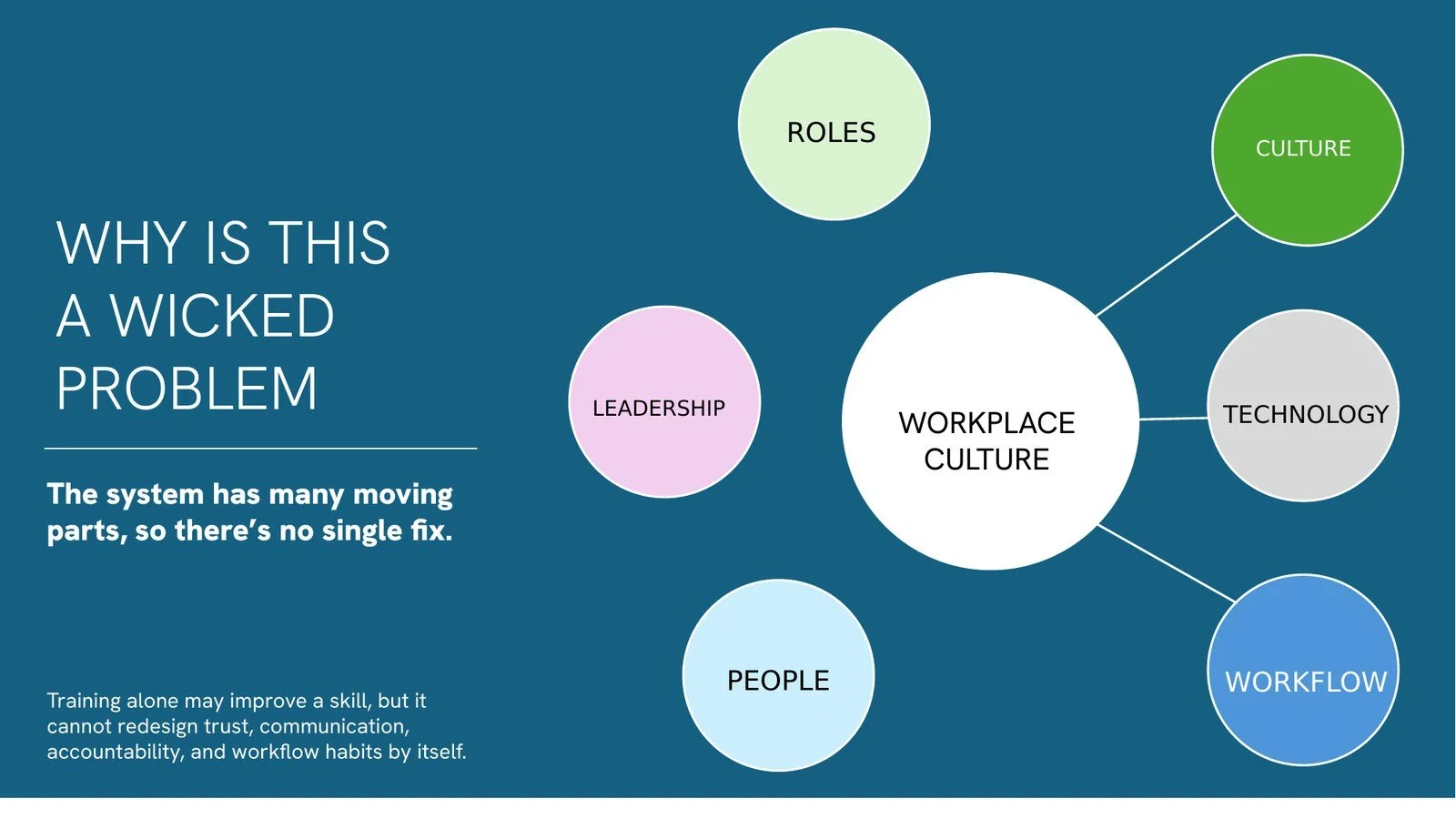
A Wicked Problem
Workplace culture is shaped by people, roles, leadership, technology and habits all at once, so there is no single fix. Software training alone can teach a tool without changing behavior, and a one-time conversation can resolve an incident without changing the conditions that caused it. I framed the culture itself as the design problem.
What the Research Revealed
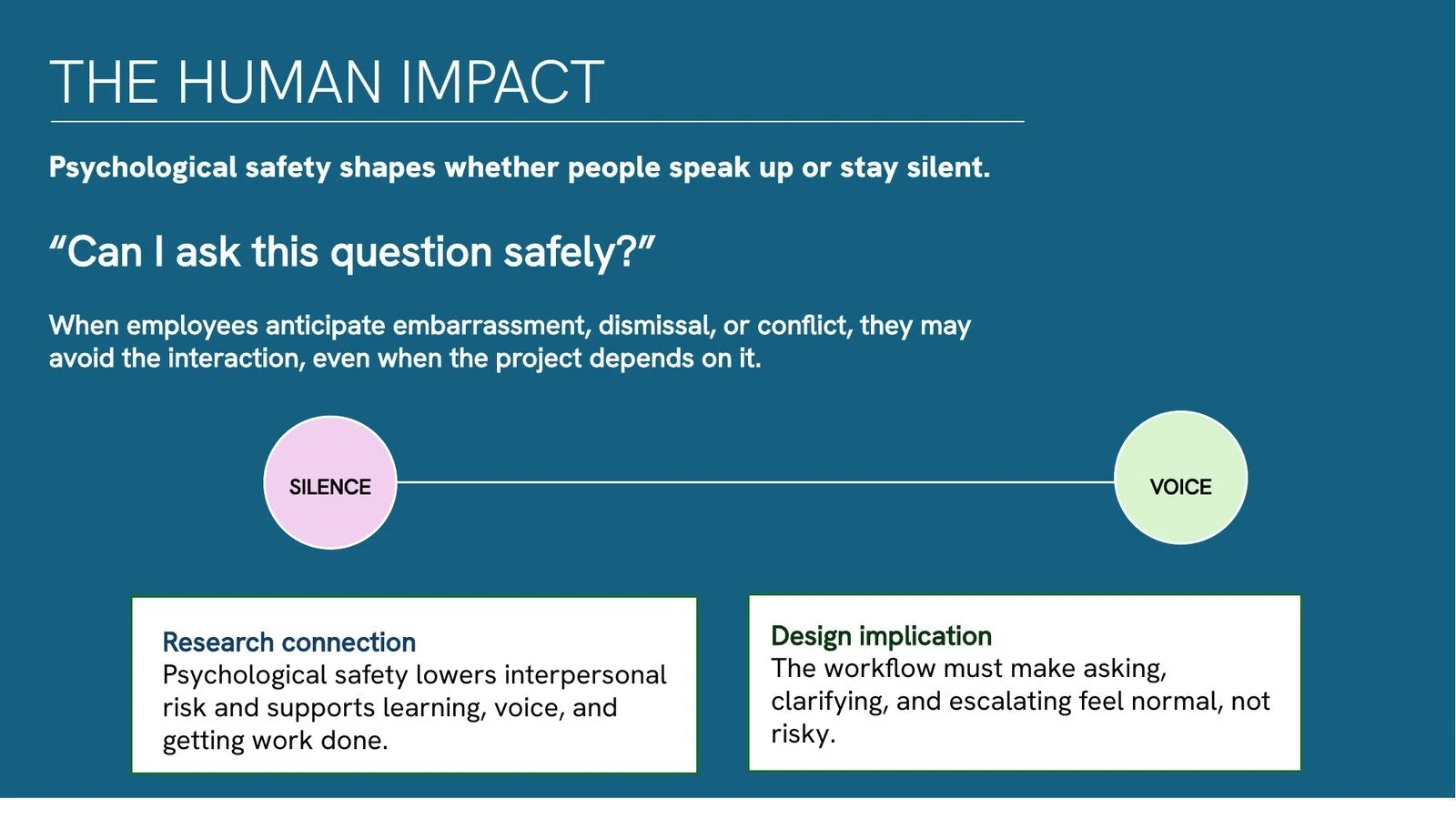
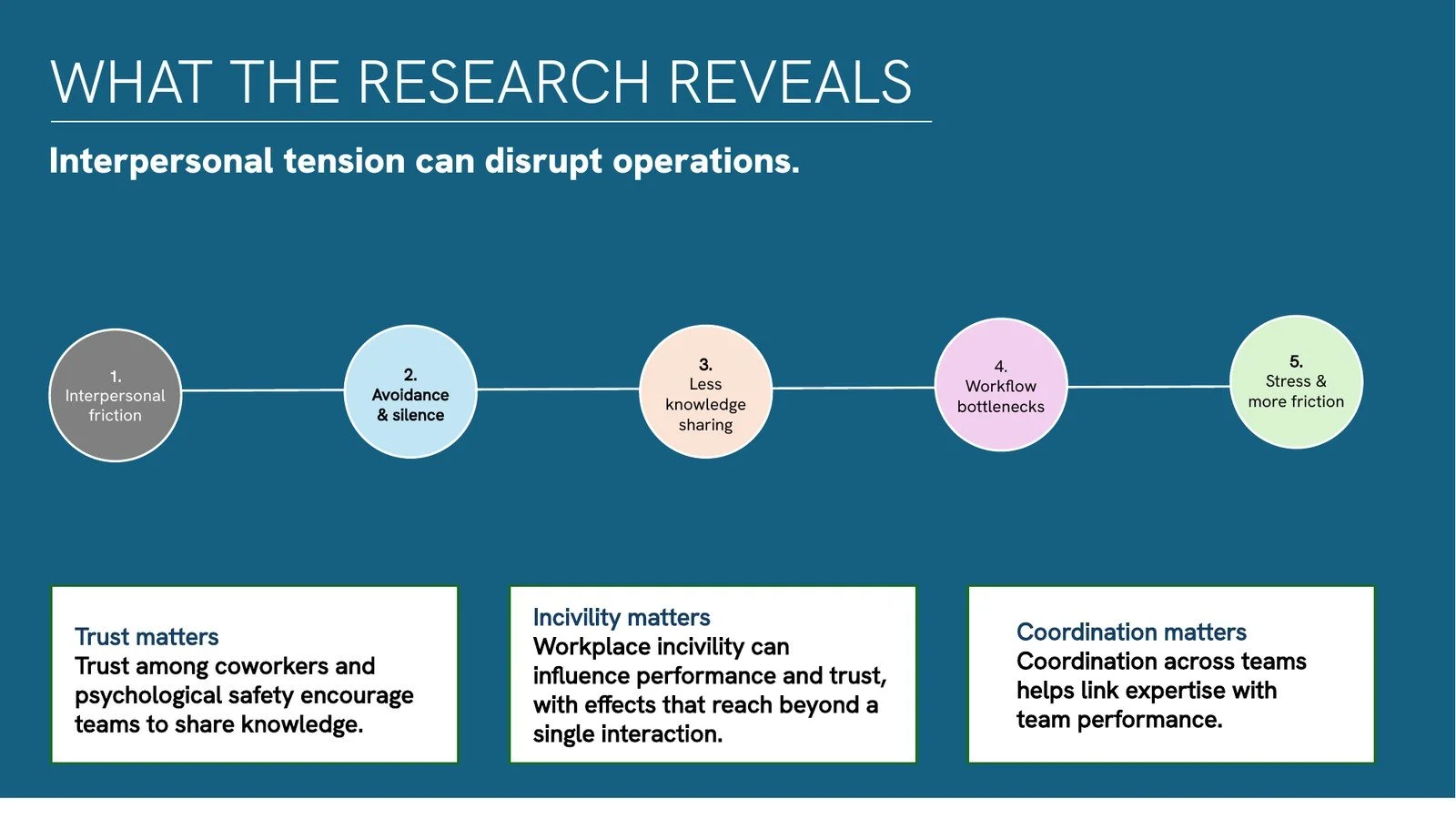
I drew on research into psychological safety, employee voice and silence, coworker trust, workplace incivility and team learning. Together it showed a repeating cycle: friction leads to avoidance and silence, which reduces knowledge sharing, which creates workflow bottlenecks, which adds stress and more friction.
Persona
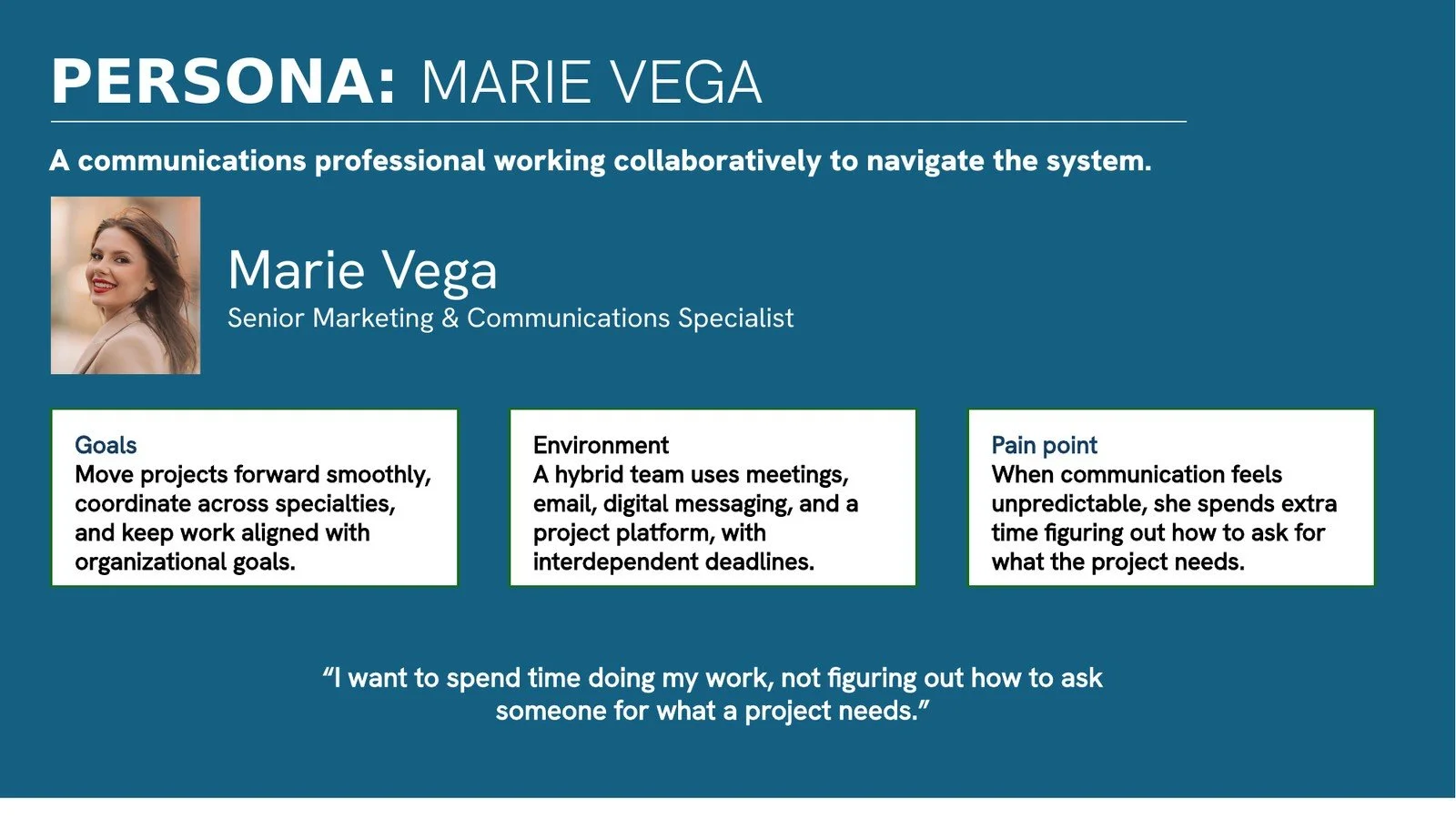
Marie Vega, a senior marketing and communications specialist on a hybrid team. She wants to move projects forward smoothly across specialties, but when communication feels unpredictable she spends extra time figuring out how to ask for what the project needs. “I want to spend time doing my work, not figuring out how to ask someone for what a project needs.”
Experience Is Not a Fixed Label
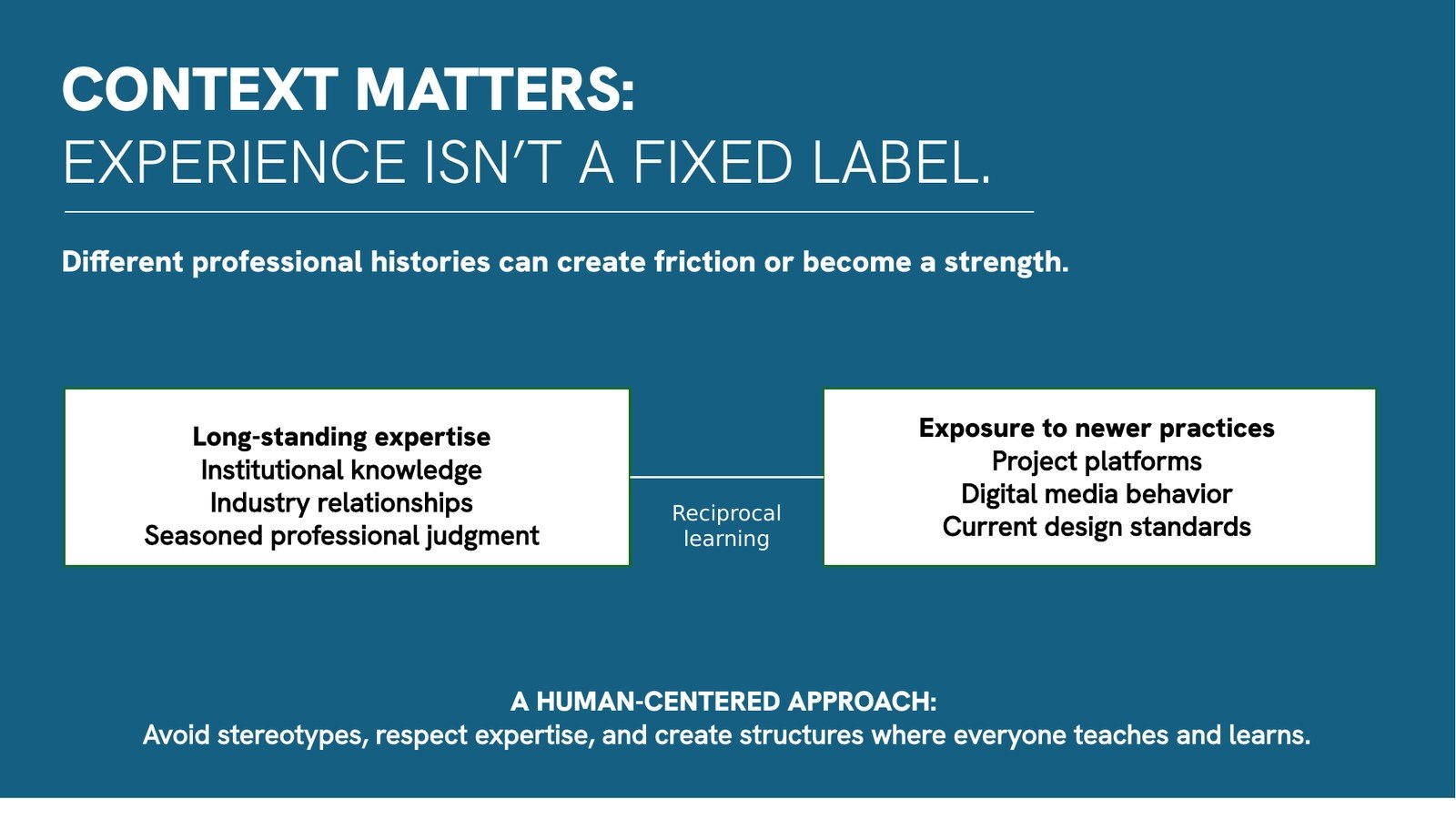
Teams mix long-standing expertise with exposure to newer tools and practices. Rather than relying on generational stereotypes, the design treats both as assets and builds in reciprocal learning, so everyone teaches and everyone learns.
The Solution
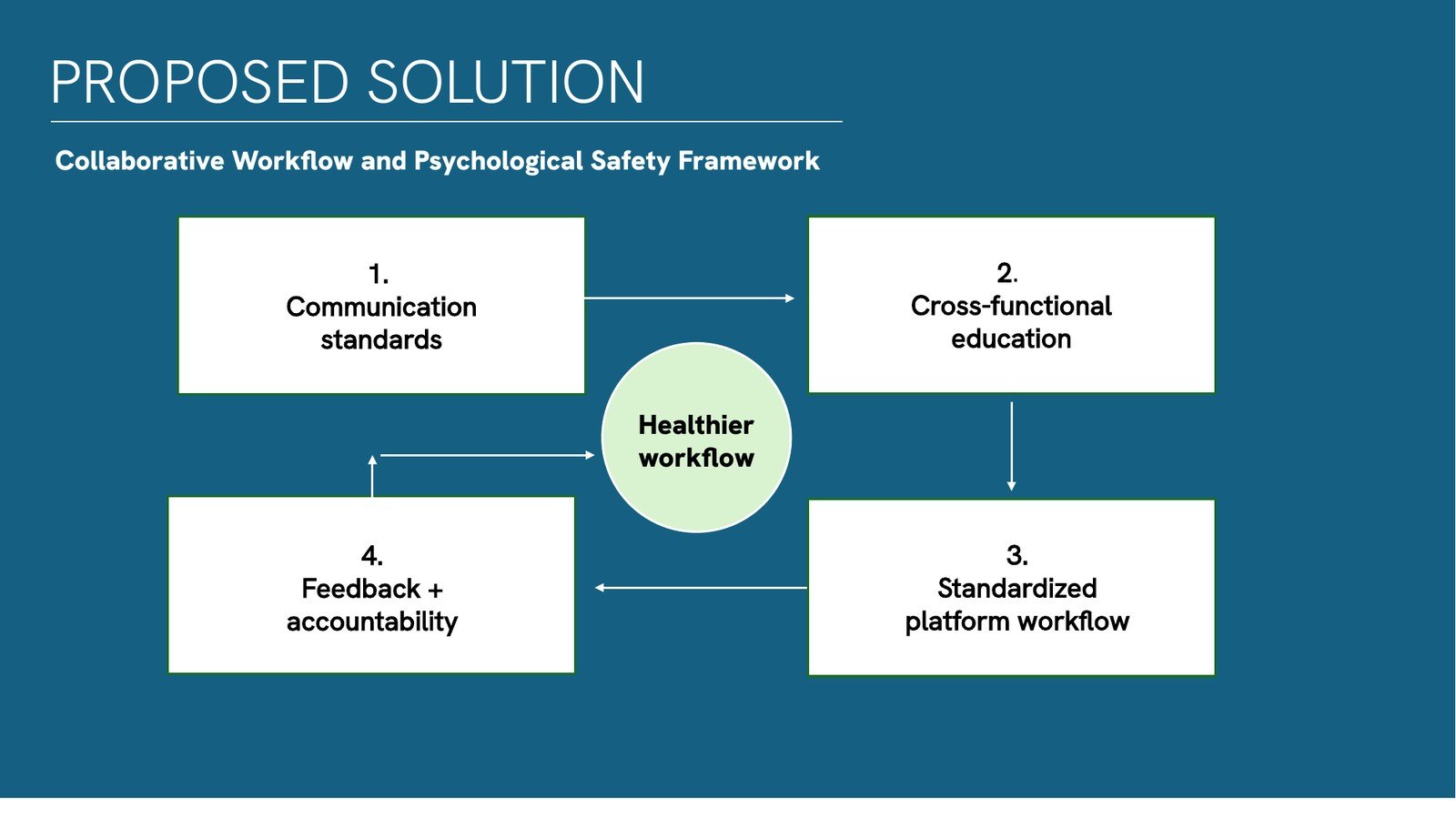
A Collaborative Workflow and Psychological Safety Framework with four connected parts: shared communication standards, cross-functional education where each specialty explains what it needs and why, a standardized project-platform workflow with checklists and clear handoffs, and structured feedback with leadership accountability.
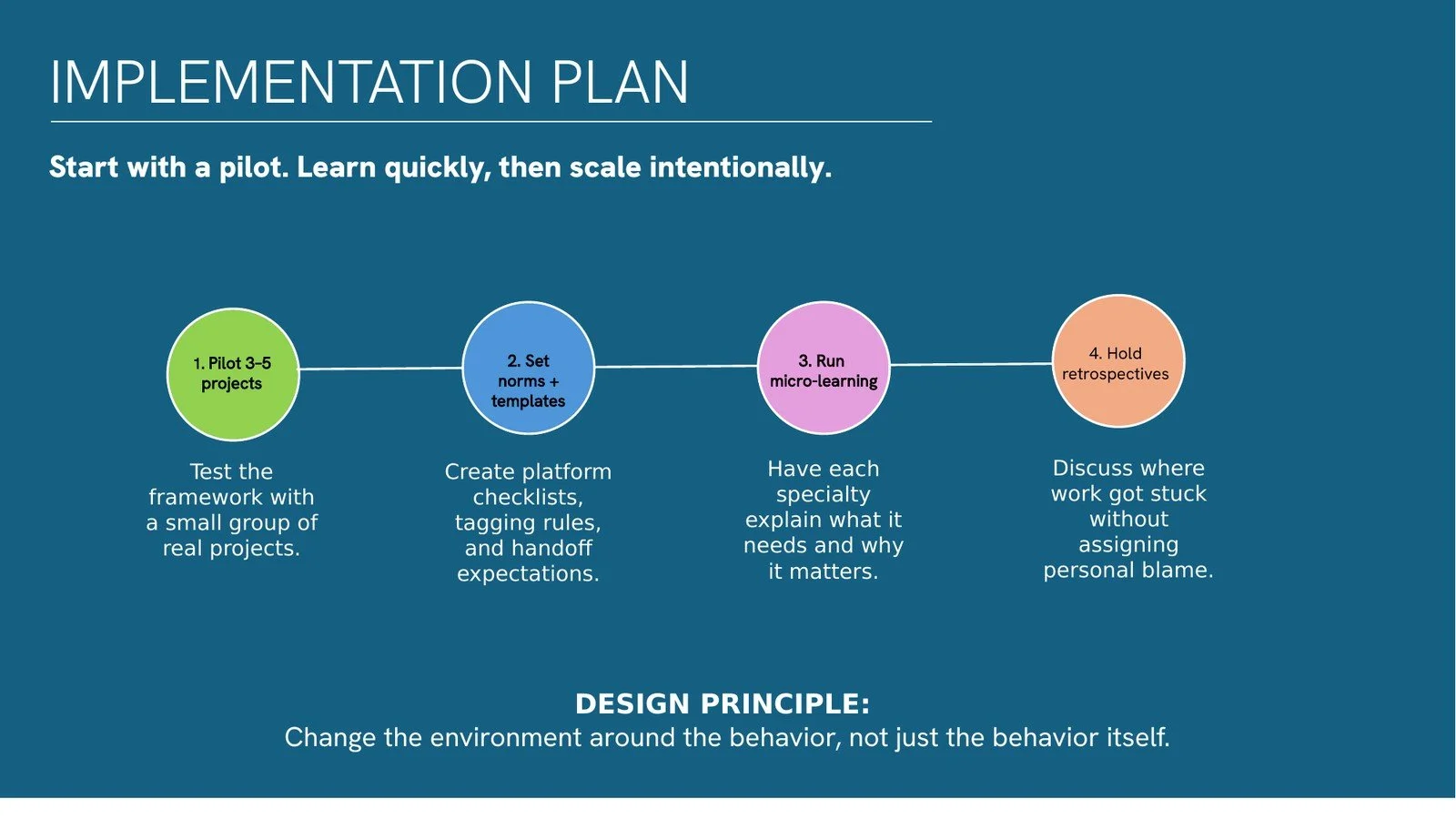
The guiding principle: change the environment around the behavior, not just the behavior itself.
Pilot Plan
Start small and learn quickly: pilot the framework on three to five real projects, set norms and templates, run short cross-functional learning sessions, and hold blameless retrospectives to find where work got stuck.
Measuring Success
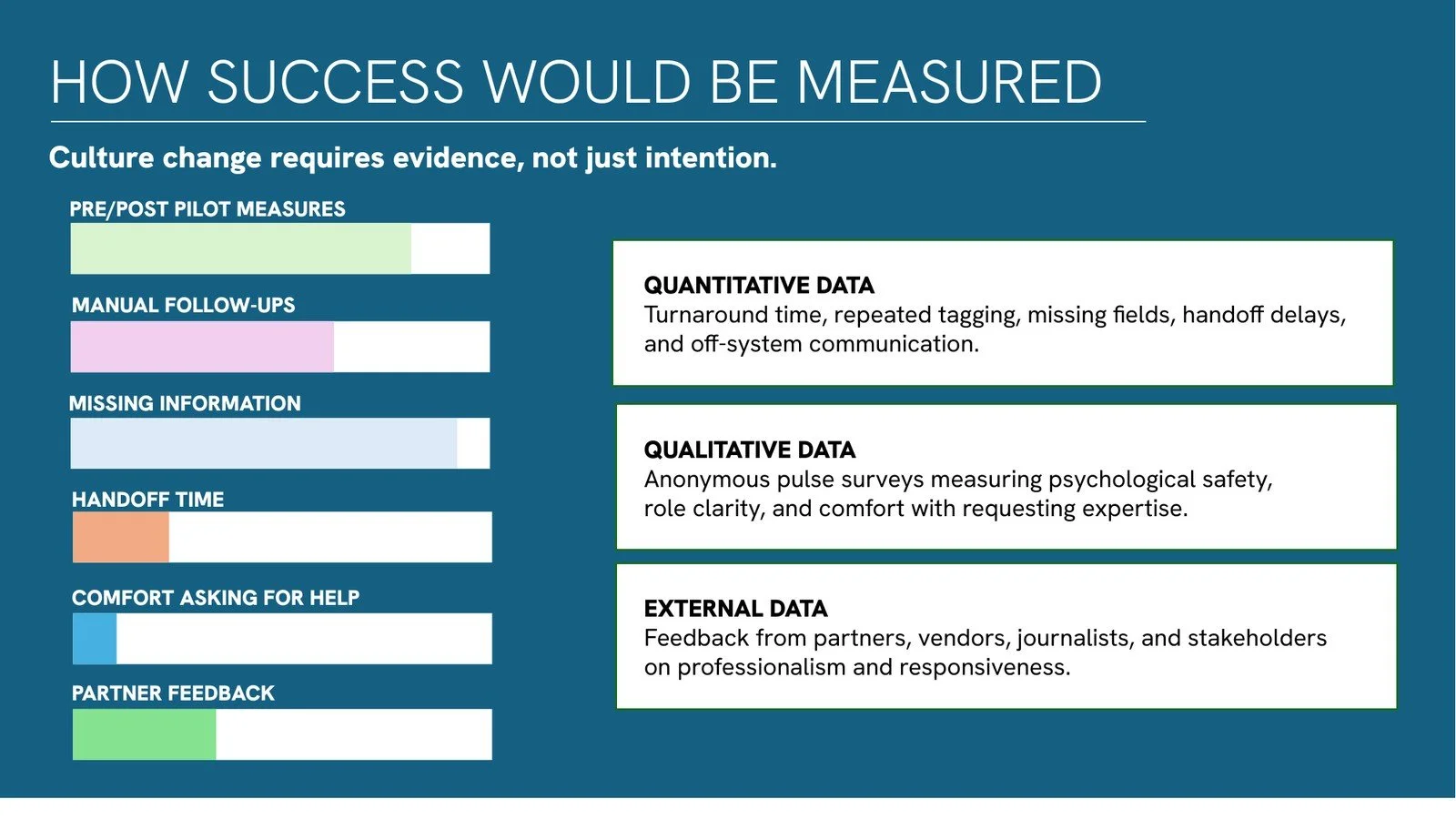
Quantitative: turnaround time, repeated follow-ups, missing information, handoff delays and off-platform communication. Qualitative: anonymous pulse surveys on psychological safety, role clarity and comfort asking for expertise. External: feedback from partners and stakeholders on responsiveness. All measured before and after the pilot.
Takeaway
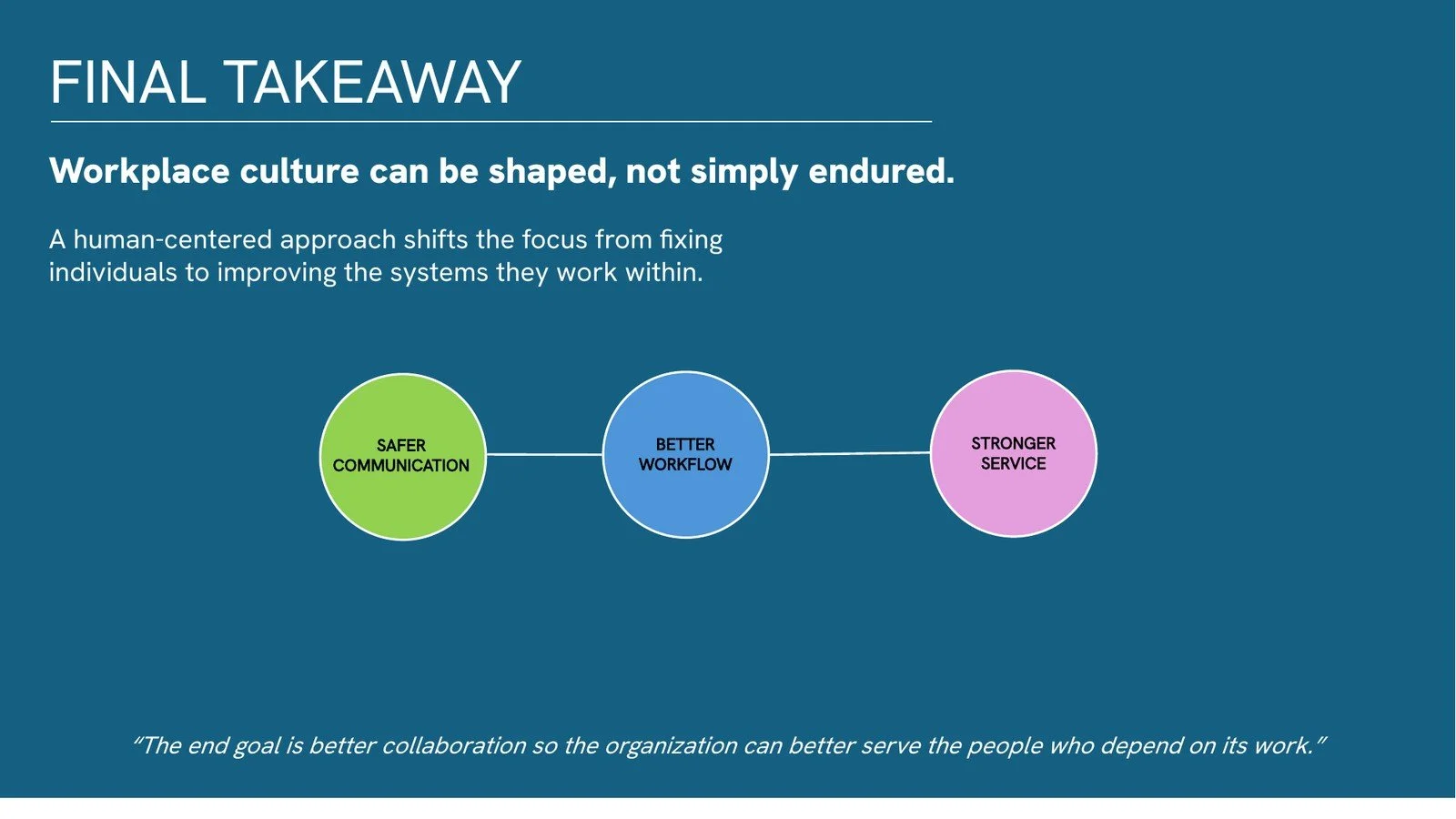
Workplace culture can be shaped, not simply endured. A human-centered approach shifts the focus from fixing individuals to improving the systems they work within, so the team can better serve the people who depend on its work.