Pretty in Pink: Online to In-Person
A human-centered design for turning an online creative community into in-person event attendees
Online-to-In-Person Event Journey
-
A graduate design-for-social-innovation project for Delaware Female Creatives (DFC), the women-led creative community I run. DFC had a highly engaged online group, but far fewer members showed up in person at our Pretty in Pink market. I used human-centered design to build and test an online-to-in-person learning journey that gives members a reason, and the confidence, to come.
-
My Role
Researcher, Service Designer & Prototyper
Context
Graduate coursework · DSGN 500: Fundamentals of Design for Social Innovation, Spring 2026
Project Scope
Empathy Research · Problem Statement · Customer Persona · Creative Brief · Ideation · Storyboard · Figma Prototype · A/B Testing
The Problem
Delaware Female Creatives is a community for women business owners and creatives. Members engage actively online, but that energy did not carry over to our in-person events like the Pretty in Pink women-owned business market.
My guiding question: how might we get online members to attend in-person events?
Understanding Members
I started with empathy research and built a customer persona around real member needs: small business owners who want to grow but feel unsure about showing up, selling and networking in person.
Ideation
I brainstormed widely, grouped the ideas into five themes, then refined the strongest with the NABC method (Need, Approach, Benefits, Competition) to choose a top three. The winning idea was a resource-based bridge: a short online class (Part 1) that leads into a hands-on, in-person workshop (Part 2) held at Pretty in Pink.
The Prototype
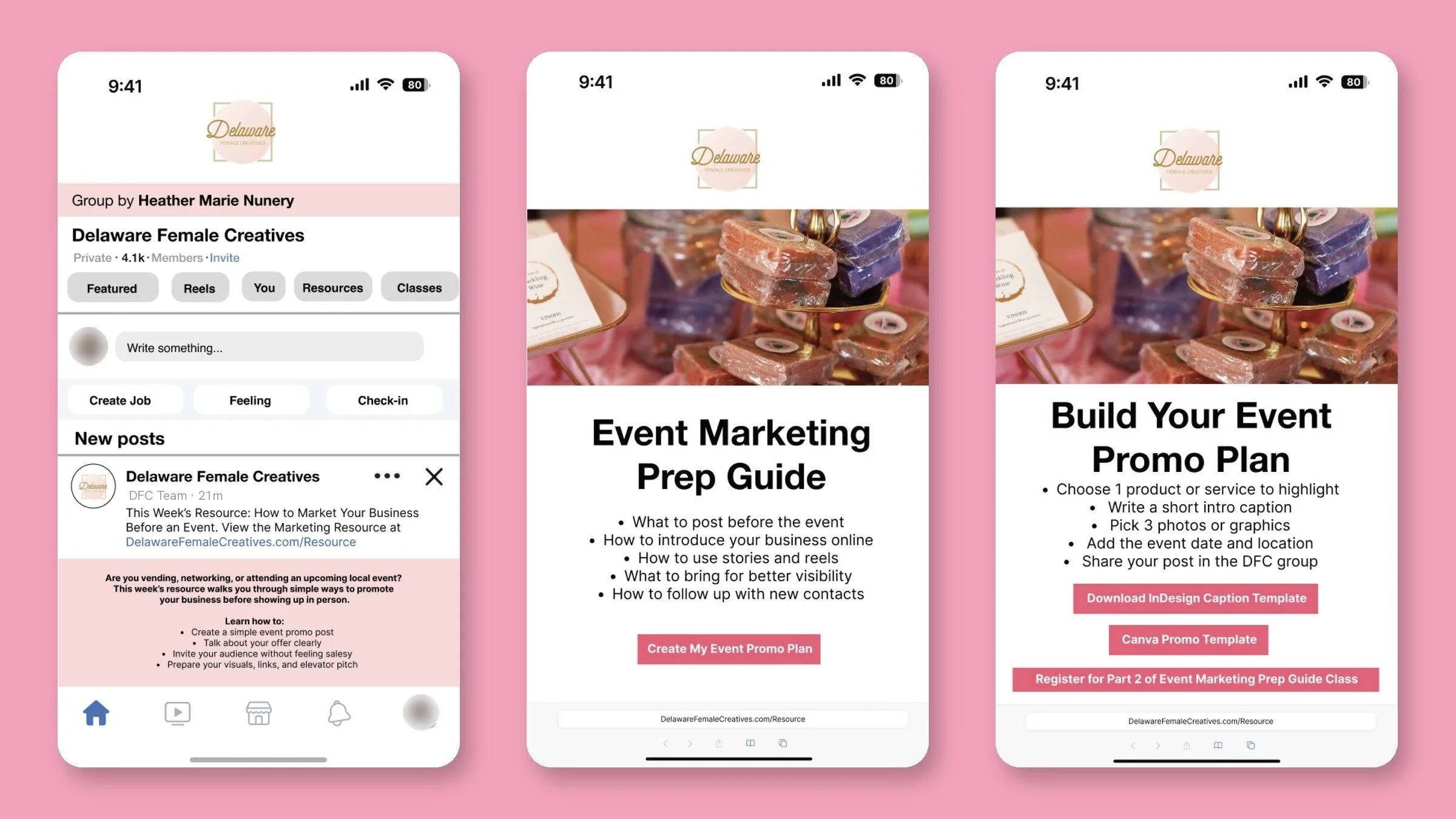
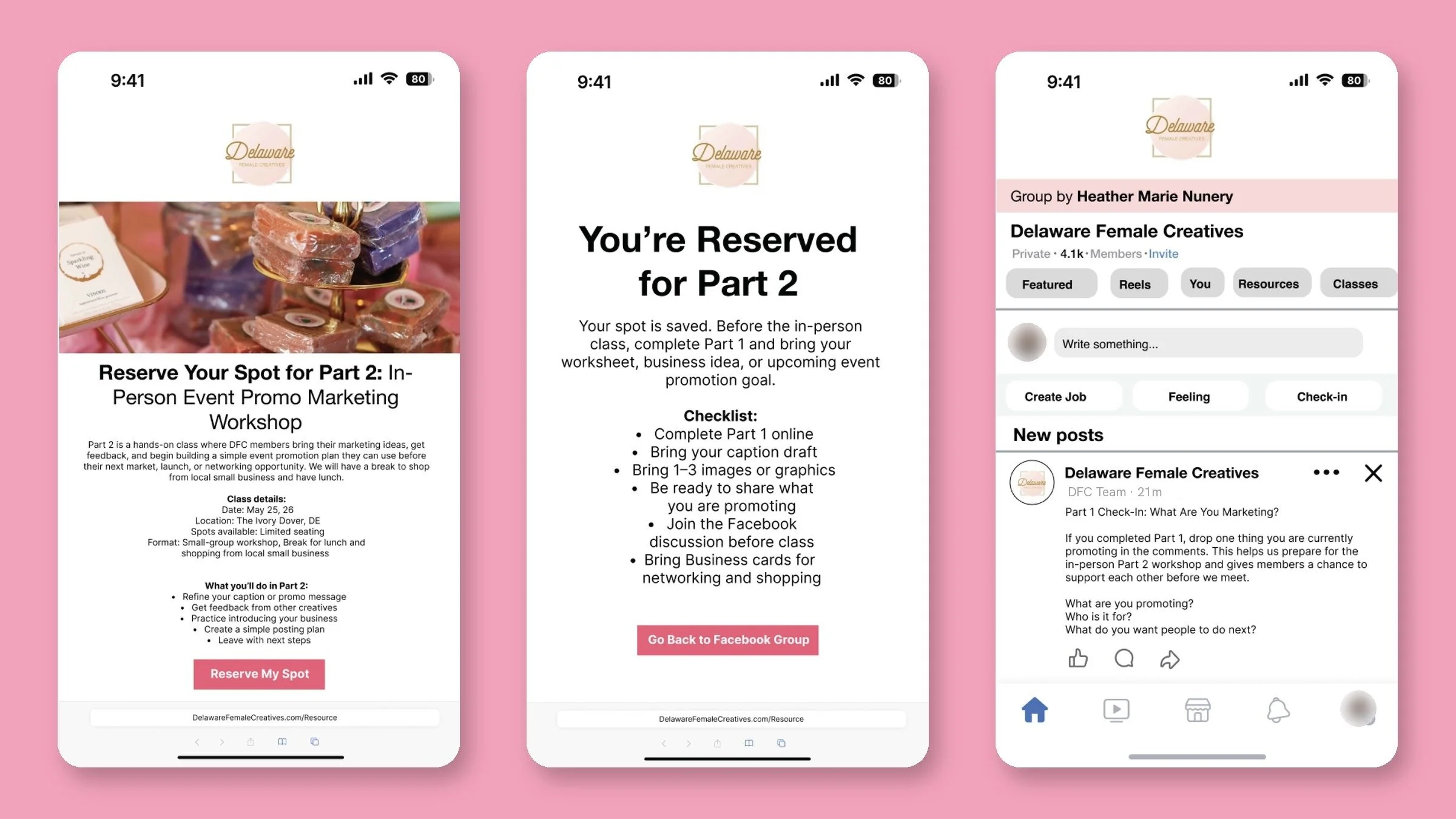
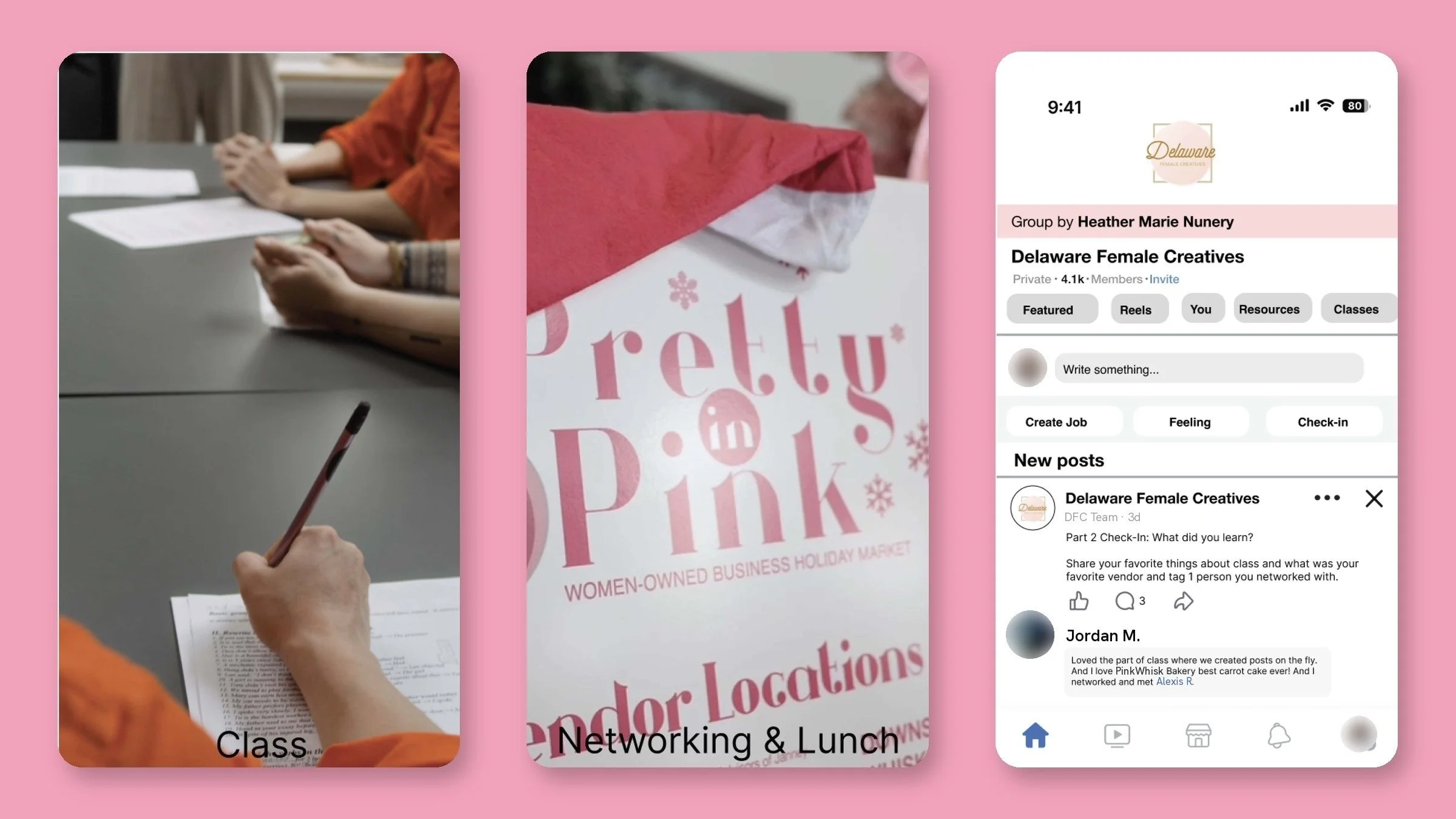
I mapped the experience in a hand-drawn storyboard, then built a Figma prototype of the full journey: a weekly resource post in the DFC group, an Event Marketing Prep Guide, a promo-plan builder with templates, Part 2 registration with a clear checklist, group check-ins, the in-person workshop with networking and shopping, and a post-event reflection.
Testing
I ran an A/B test through SurveyMonkey. Version A started online and then moved in person; Version B started in person. Two of the three participants preferred Version A because it felt clearer, less intimidating and helped them arrive prepared. The third preferred starting in person to ease social anxiety: “an icebreaker first gives me peace of mind.”
Testing also surfaced real barriers to attending: travel, schedules, childcare and uncertainty about the value of the event.
What I Would Do Next
Keep the online-first path as the default while adding an optional in-person icebreaker, and address the barriers testers named with a remote option, clear pricing and agenda, a live Q&A and accessibility details up front.
Takeaway
People do not need more events; they need a reason and the confidence to show up. Designing the journey from the screen to the room made attending feel like a natural next step.